Most guests stepping onto a dhow in Dubai Marina notice the obvious things first. The glossy curve of the hull, the amber glow of lanterns reflected on the water, and the skyline that looks purpose-built for postcards. What they rarely see is the choreography that makes a Dubai marina cruise feel effortless. The smooth boarding, the way food arrives hot and on time, the sound balance of the oud against the gentle thrum of the engine, and the quiet safety checks that let you relax without knowing why. Spend a season with a crew, though, and you learn that a great Dhow Cruise Dubai marina experience is part tradition, part logistics, and part weathered judgment.
I have worked a handful of roles on these waters, from lining fenders at the Marina Walk to coordinating a double-capacity New Year’s Eve sailing with synchronized fireworks and police patrols. This is a tour behind the scenes, a look at how a Dubai marina cruise actually works, and a nudge toward the details that separate a decent evening from a memorable one.
The dhow, updated without losing its soul
The wooden dhow the Gulf is known for started as a working vessel, not a floating dining room. Older crew members still talk about the days when a dhow split its time between transporting goods and hosting small gatherings. The modern Dhow Cruise Dubai marina retains the spirit of the old craft, but under the polished wood you’ll find fibreglass reinforcement, modern bilge pumps, and marine-grade electrical systems that pass inspection under Dubai Maritime City Authority rules. Purists might grumble, yet these upgrades are why you barely notice the swell when another yacht carves by too close to the Marina channel.
Look closely at the deck layout and you see two priorities fighting for space. On one hand, the business needs seats, clear lines for service, and a buffet that runs hot and cold without a hiccup. On the other, the experience demands unbroken views. The compromise is the semi-open upper deck, where the wind can play but the lighting stays controlled, and a climate-controlled lower deck where families, older guests, and heat-averse travelers settle comfortably even when August humidity sits like a wet coat. The crew will tell you that on peak nights they manage the microclimate as much as they manage guests. Open too many windward panels, you invite damp plates and toppled water glasses. Close too many, your guests sweat through a shirt before the soup course.
The routing puzzle the public never sees
From your table, the Marina looks like a calm oval. In reality, it is a living map, with patrol boats, fishing craft, private charters, jet skis, and party yachts all moving under rules that keep traffic flowing. Each Dhow Cruise Dubai departs under a permit for a specific time slot. If the schedule slides, you lose the best viewing points to other vessels. That matters because there are three moments every guest expects: the slow pass by Ain Dubai, the salute to JBR, and the channel turn where the skyline stacks perfectly for photos.
We navigate around bottlenecks that form at predictable corners. The short bend near Pier 7 catches many skippers off guard when the wind shifts from the Gulf, pushing bows across a line they intended to hold. Add a sea taxi on a tight turnaround and you get an accordion of brake lights on water. The experienced helmsman reads that risk from fifty meters out and makes a small, early adjustment. Passengers barely notice, but the difference between a smooth glide and a clumsy correction is five seconds of judgment.
Tides matter too. Dubai Marina is a man-made channel connected to the Gulf, and the exchange affects water levels just enough to change how a dhow handles, especially when fully loaded. At spring tide, you feel a slightly stronger set as you aim for the breakwater gap near Bluewaters. Veteran captains compensate with small, precise throttle work. They never saw a simulator teach that. They learned by watching other boats make it look easy, then trying, failing, and trying again under an older skipper’s supervision.
The quiet pre-departure rituals
Three hours before sailing, the crew divides into teams that look like standard hospitality roles but behave more like a pit crew. One team inspects life jackets and counts them against a manifest. Another checks the PA system, not just by hearing a test tone, but by walking the deck and listening for dead zones in sound coverage. A third team briefs the kitchen on final dietary notes, because on a Dubai marina cruise at least one table will have a layered mix of halal, vegetarian, gluten-free, and nut-free requests, and you cannot improvise that at the last minute.
The best-run boats lean heavily on a shared WhatsApp group where the host, kitchen lead, deck manager, and captain log updates. If a tour bus is stuck on Sheikh Zayed Road and twenty guests will be ten minutes late, the deck manager holds the boarding queue and communicates a new departure window. Those minutes ripple outward: buffet hold time, dance performance timing, and light calibration for photo-friendly moments. This is where you spot a crew that has sailed together for a while. They make small decisions the same way, and the result feels seamless.
The first impression that’s worth a hundred online ads
The Marina is saturated with choice. Guests pick from dozens of similar-looking experiences, many labeled as Dhow Cruise Dubai marina or a variation of Dubai marina cruise, all promising “unlimited buffet,” “live entertainment,” and “panoramic views.” The first thirty seconds after you step on board decide more than any brochure. A host who recognizes your name or notes your celebration without prompting changes your posture from skeptical to open. A clean scent rather than diesel, a glass polished without streaks, and the right music volume offer a quick, wordless message: relax, we’ve got you.
I once watched a new host glance at a toddler’s balloon tied to a stroller, then shift a table assignment on the spot to place that family against the rail with more elbow room. Five seconds of thought, twenty minutes of goodwill. That family left a long review, and we didn’t have to ask.
Feeding a full boat without chaos
Buffet service at sea is a study in flow, temperature control, and timing. If you put all the good stuff at the start, you get a logjam that stalls the queue and flattens the energy on deck. Spread the star dishes too far apart, and you end up with empty platters at opposite ends of the line. The best layouts stage salads and cold mezze first, then proteins, starches, and finally desserts positioned slightly off to the side to keep traffic looping rather than backing up into the main aisle.
On a typical night, a boat might serve 120 to 180 guests. That means the kitchen fires mains in three waves. Hold them too long, and the chicken dries, the biryani clumps, and sauces break under heat lamps. Send them too early, and the second seating arrives to find a tired spread. A good kitchen lead tracks plate return rates and adjusts portion sizes on the fly. If a dish comes back half-eaten at more than ten percent of tables, we rethink the seasoning or the serving utensil. Sometimes a different spoon changes how much guests take, which prevents waste on a long pass around the Marina.
You can tell when a Dubai marina cruise team respects the food. Steam rises without fogging nearby glass, carving is done by someone who knows how to slice without shredding the meat, and the kitchen uses insulated carriers to move hot trays through wind on the top deck. Details like that keep dinner credible, not just plentiful.
Entertainment that serves the night, not itself
Live performance on a boat is part art, part logistics. The stage area competes with dining space, and the acoustics bounce off water, glass, and wood. Traditional tanoura dance draws crowds, but the costume and spin require clearance around the performer. The crew quietly shifts chairs a few inches, moves a service station, and signals the lighting tech to avoid blinding either the dancer or the audience.
Instrumental sets, especially oud and qanun, do best in the first half of the cruise. They set a mood that pairs with skyline views. Later in the evening, when guests have eaten and the boat moves through the open channel, the DJ transitions into a modern set that still respects the mixed audience. The goal is to keep energy rising without drowning conversation. Many crews have learned to argue for a sound check that lasts more than two minutes. It saves complaints and lets you control the vibe when the engines cycle during a slow turn.
As with food, humanity wins. A performer who acknowledges children, adapts to a birthday table, or times a finale to the lighthouse pass earns applause that feels sincere, not prompted.
Safety that disappears into competence
Guests want to forget about safety. Our job is to ensure they can. Every Dhow Cruise Dubai marina carries life jackets sized for adults and children, with extras accessible from labeled lockers. On busy nights you will see crew members unobtrusively coaching guests about where to stand for photos. No one needs to hear the phrase risk management when a simple hand gesture and a step back from the rail will do.
Underneath the calm are checklists that earn their keep only when a problem occurs. Fire suppression stations are inspected by third parties, and crew practice drills during off-peak hours. I have been through one real engine hiccup off Bluewaters, when a stubborn fuel filter threw us a curve. The captain radioed the patrol, the deck manager reassured passengers with a plain explanation rather than vague reassurances, and within twenty minutes we were under way with backup power, guests sipping tea like nothing happened. The difference was training and transparent communication. People can handle a delay if you talk to them like adults.
Weather, that uncompromising partner
Dubai rewards you most evenings with clear skies and a forgiving sea. Yet the Marina has its microclimate moments. In winter, a northwesterly shamal can push wind into the channel and drop temperatures suddenly. In summer, humidity spikes turn the upper deck into a slick surface if you are not attentive. Crews carry towels for railings and nonslip mats for problem areas. They also make subtle seating adjustments, guiding older guests and children toward the lower deck when gusts build.
Rain, rare but real, forces fast decisions. If your cruise sells primarily on outdoor views, you need a Plan B that feels like a choice, not a consolation prize. That might be a live cooking station relocated to the lower deck, a storytelling set about dhow history, or a quick side excursion along a different stretch where the skyline looks dramatic behind rain streaks. Creativity matters more than apologies.
Photography and the choreography of views
A Dubai marina cruise sells more pictures than most weddings. The best crews anticipate where guests will stand for the money shots and shape the boat’s movement around those sightlines. They know you want the frame where Cayan Tower spirals on the left, JBR stacks high on the right, and the sweep of the channel delivers a natural leading line. They also know that if they park too long in one spot, the harbor master will radio them to keep the lane open.
I often suggest that guests walk the deck once before the boat pushes off, noting where reflections are worst and where railings are clearest. Sunset timing depends on the season, so the photo sweet spot can be in the first quarter hour of the cruise in winter, or closer to midpoint in summer. If you see crew dimming deck lights briefly during a pass, they are not cutting corners. They are reducing glare so your phone camera can focus on the skyline rather than the bulb above your head.
The business end nobody glamorizes
A Dhow Cruise Dubai marina is a hospitality business with tight margins. Fuel, permits, port fees, entertainment, and staff hours eat the budget quickly. Big holidays deliver full boats and long days, but shoulder seasons put pressure on pricing. That is when the temptation to cut quality shows up. The amateurs save money in ways you will notice: thinner napkins, fewer staff on the deck, food that looks like it sat in a freezer too long. The professionals, even at competitive prices, protect what guests feel. They might reduce the number of menu items by two, but they keep the dishes that travel and reheat well. They might switch from a live trio to a skilled soloist, but they do not ditch sound checks or training.
When you book, read five recent reviews, not the top-rated or worst ones. Look for mentions of timing, service, and the ability to handle a problem. A glowing comment about a crew member by name is worth more than a generic rave about views you can get on any boat.
Trade-offs you may not have considered
It helps to think like a crew member for a minute and choose what you want most from your Dubai marina cruise. Not every night is equal, and not every seat is right for every guest. Here are five quick trade-offs that steer expectations without spoiling the charm:
- Upper deck gives you better views and fresher air, lower deck gives you better climate control and often smoother conversation. Early departures offer softer light and calmer water, later departures give you a sparkling skyline and more nightlife buzz. A smaller boat feels intimate and moves quicker through bottlenecks, a larger boat offers more amenities and usually steadier motion. Buffet service keeps lines short when well managed, plated service feels elegant but demands stricter timing and can test the kitchen under swell. Live traditional shows add color and a sense of place, quieter instrumental sets make room for conversation and reflection.
A typical night, minute by minute
Let’s pull back the curtain on a common two-hour evening sailing that advertises itself as a Dubai marina cruise. Call time for crew is three hours before departure. The captain runs a final weather check and assigns radio channels, while the deck manager does a quick safety walk and a longer aesthetic one. Nothing kills ambiance faster than a half-burned bulb or a water https://www.google.com/search?q=Dhow+Cruise+Dubai+Marina&ludocid=1285093274805301543&lsig=AB86z5Vxu-IAI09soedq4IVEFF8j stain on polished wood. The kitchen has already prepped sauces and par-cooked proteins to finish on board, with garnish trays organized by station.
Guests begin arriving forty minutes before departure. The host triages: families with strollers and seniors board first, then couples celebrating, then group bookings. A photographer catches the first wave of pictures as guests step onto the gangway. If it sounds like a sales ploy, it is, but done with warmth it becomes part of the ritual.
Five minutes to push-off, the deck manager gives a safety briefing that is short, specific, and plainspoken. Where the life jackets are, where the exits are, what to do if a child strays, and which deck zones are off-limits during turns. Then the lines come in, the engine frees the boat from idle, and the route begins.
During the first twenty minutes, the kitchen holds platters and watches for sea behavior. If the swell is up from passing yacht traffic, they plate saucier dishes to keep them neat. The musician plays a set that favors the feel of arrival, and the MC makes two announcements, no more. People came to relax, not to be sold add-ons every five minutes.
At the midpoint, the boat slows near Bluewaters for the Ain Dubai view. The crew dims select lights to help photography. The entertainer transitions into the signature performance, which draws people to the center aisle for a few minutes. Service teams quietly reset water jugs and clear plates. By the final third of the route, desserts come out and the deck cools a degree or two. The captain times the return to land at a clean moment in traffic so the docking feels graceful. Then a final thank you over the speakers, simple and sincere.
Culture on the water, not just tourism
Skeptics call the Dhow Cruise Dubai marina a tourist cliché. Spend enough nights on deck and you see a different picture. You watch a father point out his first job tower to his teenage son and a grandmother explain the history of wooden boats to a child who has only known high-speed ferries. You meet expats using the cruise as a soft landing for visiting parents who find the desert city overwhelming from ground level but discover a calmer Dubai at waterline height.
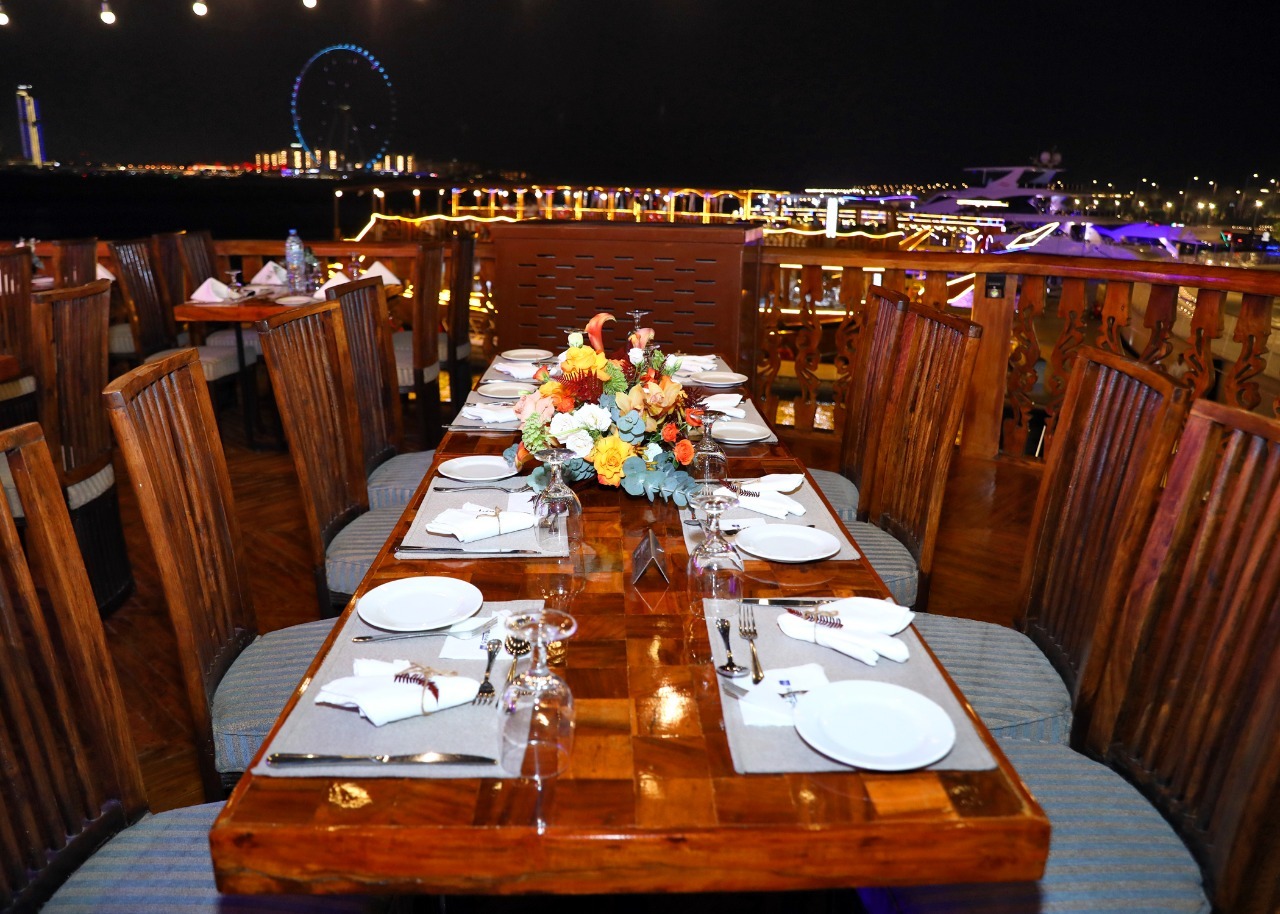
Culture hides in small choices. Arabic coffee served before dessert rather than after, a brief introduction to dhow craftsmanship woven into the MC’s welcome, a tannoura performer who explains the meaning behind the colors in his skirt to a child who asks. That is how a commercial product turns into a memory grounded in place.
How to choose the right cruise for you
You cannot go wrong with the Marina itself. The lights deliver, the water behaves most nights, and you will come away with at least three solid photos. The variable is the operator. Choose based on what you care about most, and ask two or three direct questions before you book. How many crew members are on duty for your expected passenger count? What is the plan if the weather turns? Is the entertainment live, and at what volume? Straight answers mean a crew that knows its craft.
A Dhow Cruise Dubai can be a quick tick on an itinerary or it can be the evening you talk about years later. The difference is rarely the skyline. It is the work you do not see: the short safety brief that gives you peace of mind, the server who remembers your table’s dietary request without a second prompt, the captain who finds the seam between two larger boats so your view stays clean, and the kitchen that serves dishes hot, not just plentiful.
A few crew-tested tips for guests
- Arrive fifteen minutes early to settle in, but do not board too early in peak summer if the sun is still high. The boat is most comfortable once airflow settles at departure. If you are sensitive to motion, choose a lower deck seat near midship and face forward during turns. Tell the host discreetly if you are celebrating. The crew can time a small moment without turning the night into a performance. When taking photos, step slightly back from the rail to avoid glare and lens fog from sea air. Wipe your phone lens with a dry cloth just before the skyline pass. Hydrate. Between breeze, excitement, and the temptation to rely on sugary drinks, many guests forget water and feel sluggish by dessert.
What the crew takes home after the guests leave
When the last guest steps off, the team still has another hour of work. Trash goes out carefully, separated to keep the Marina clean. Surfaces get wiped with a boat-friendly solution that does not damage varnish. The captain logs any anomalies, from a slow pump cycle to a quirk in the generator output, so maintenance can address them before the next sailing. The kitchen compares expected consumption with actual return volume to adjust recipes and procurement. Small improvements add up. That is how a crew stays proud and a Dhow Cruise Dubai marina continues to feel special even on its hundredth run.
If you find yourself on a dhow soon, take one moment to look down at the water. Watch the way the wake curls and neatens itself behind the stern, as if the boat is combing the Marina’s hair. That tidy curve reflects more than physics. It is the mark of a team that knows how to move through a crowded, glittering city with grace, then invite you to do the same for two unrushed hours.